
Finding and sharing knowledge in Slack
Guru's Slack integration give your team two ways to access knowledge without leaving Slack: AI-powered answers from a Knowledge Agent, and search using the /guru slash command. You can also share Cards directly in response to teammates' questions.
This article covers how each mode works and who can use it. To set up Knowledge Agents in Slack first, see Setting up Guru's app for Slack.
Getting AI-powered answers in Slack
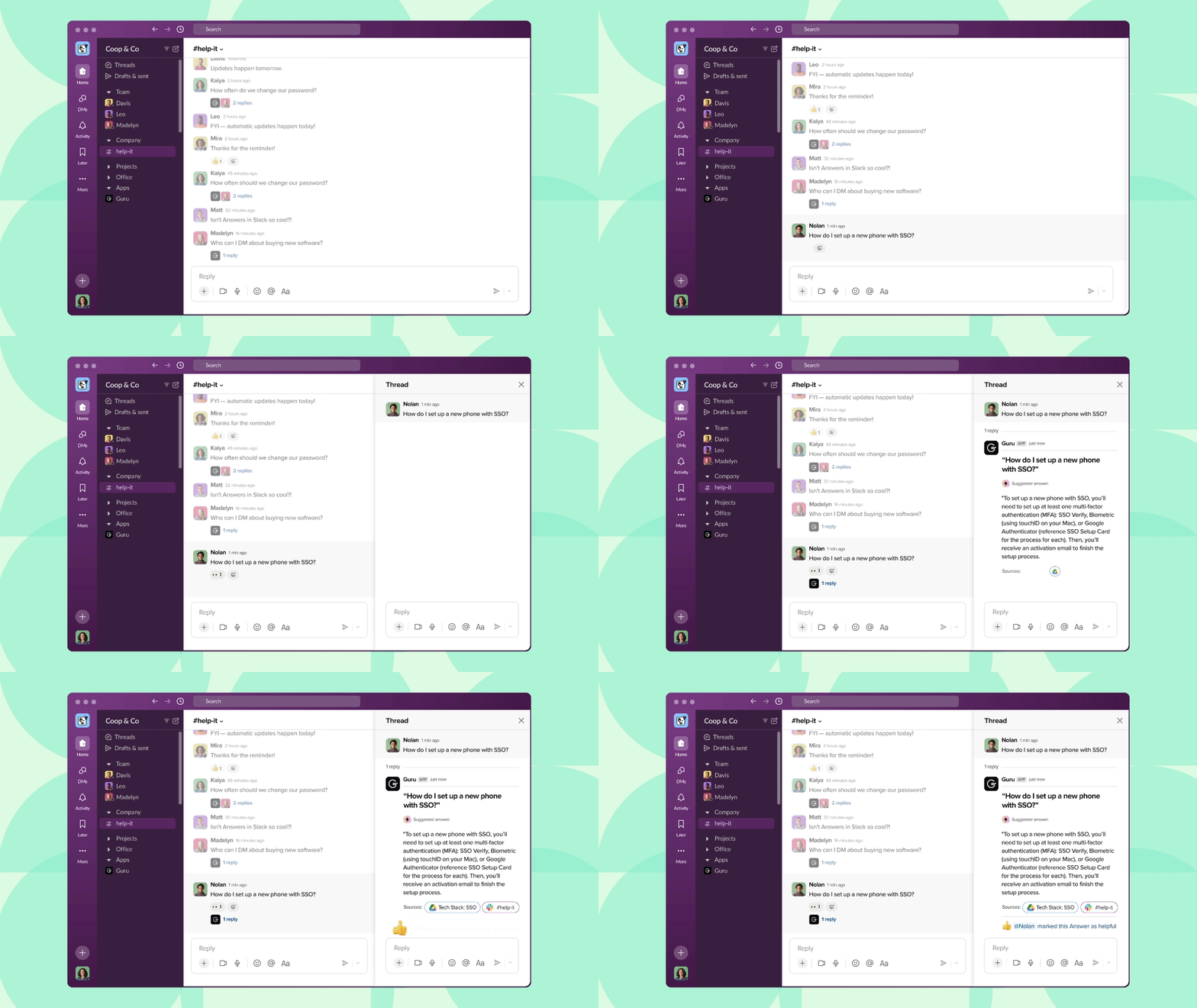
When a Knowledge Agent is connected to a Slack channel, Guru automatically detects questions and suggests answers using its configured sources - no command required.
NoteKnowledge Agents must be connected to a channel by a Guru Admin before AI answers are available there. See Setting up Guru's app for Slack.
Ask @guru a question
In any channel where a Knowledge Agent is active, tag @guru with your question to get an answer on demand:
@guru how do I submit an expense report?
Guru will respond with an AI-generated answer, including references to the source Cards it used.
A few things to know:
- Visibility. Suggested answers are visible to everyone in the channel — including teammates who don't have a Guru account.
- Interaction. Only users with linked Guru accounts can take actions on an answer, such as marking it helpful, marking it unhelpful, or viewing the source Card.
- No Knowledge Agent connected? If the channel doesn't have a Knowledge Agent,
@guruwon't respond with an AI answer. Use the/guruslash command to search instead.
Ask follow-up questions in a thread
When Guru responds in a Slack channel, you can continue the conversation in that thread by tagging @guru again with a follow-up question. Guru takes the thread context into account — you don't need to repeat yourself.
A few things to know about how threads work:
- Only tagged messages count. Only messages that explicitly tag
@guruare used as context. Other messages in the thread that don't include@guruare not considered. - Permissions apply per person. If multiple people are asking in the same thread, each person only sees answers based on the sources they individually have access to.
- Automatic suggestions don't appear in threads. Guru only detects questions and auto-suggests answers in the main channel feed. In threads, always use
@guruexplicitly to trigger a response. - Answers are unfurled. Guru's responses in threads are fully visible without needing to expand them.
- Each question is logged separately in the AI Agent Center with a direct link back to the Slack message.
NoteAutomatic answer suggestions don't appear in DMs either. Tag
@gurudirectly in a DM to get an answer.
Searching Guru with the slash command
The /guru slash command lets you proactively search Guru's knowledge base from any Slack channel or DM — useful when you want to find and share a specific Card rather than ask a freeform question.
Use the /guru command
- Type
/guru [your search term]in any channel or DM. - Choose from the available actions:
- Post to this channel. Share the Card directly in the conversation.
- View Card. Preview the Card content privately — only you see it.
- Next. See the next search result.
- Edit search/filters. Refine your results by Collection or Tag.
You can also search from the Messages tab of the Guru app in Slack.
TipUse
/guruwhen you already know what you're looking for and want to share it with a teammate. Use@guruwhen you have a question and want Guru to find and synthesize an answer for you.
Answering a teammate's question with a Card
If a teammate asks a question in Slack and you know there's a Guru Card that answers it, you can reply directly with that Card using Slack's message actions — without leaving the conversation.
- Click the three dots (⋯) on the message you want to reply to.
- Select Answer with Card.
- If you don't see it, click More message shortcuts… and search for "Answer with Card."
- Search for the relevant Card.
- Click Post to share it in the channel.
NotePosting a Card shares it as a message in the channel. Depending on your Slack settings, that message can be deleted by the person who posted it or by a Slack Admin — this doesn't affect the Card itself in Guru.
Customizing how the agent responds in a channel
Admins can tune how a Knowledge Agent behaves in each Slack channel it's connected to, instead of applying one behavior everywhere.
- Open the Knowledge Agent connected to the channel and go to its Slack tab.
- Each assigned channel shows a Default or Customized indicator. Hover it for a summary of the channel's current settings.
- Click the gear icon on a channel to open its Channel Settings.
- Set any of the following:
- Auto-respond in channel. Respond to all messages, or only when @mentioned. Controls whether the agent replies to new channel messages or only when tagged.
- Auto-respond in thread. Respond to all messages, or only when @mentioned. Controls follow-ups in threads — even on "all messages," the agent only continues in threads it has already replied in, so it won't join an unrelated conversation.
- Respond to messages from. Humans and bots, humans only, or bots only. Useful for keeping the agent from reacting to other bots posting in the channel.
- Click Save.
Leave every setting on its default and the channel stays Default. Change any one and it switches to Customized. Until you customize a channel, it keeps responding the way it always has: answering @mentions and channel questions, without auto-continuing in threads, and only responding to people.
Best practicesTurn on Respond to all messages for a dedicated Q&A or support channel, where most messages are questions worth answering. Keep busier, general channels on Only when @mentioned — the agent doesn't yet detect which messages are actually questions, so "all messages" in a high-traffic channel means it responds to everything, not just questions.
Every answer the agent generates uses credits the same way any other answer does. Broader settings — Respond to all messages and Humans and bots — naturally produce more answers, so tune busy channels toward @mention-only if you want to keep credit usage tighter.
Who can see and interact with Guru content in Slack
Suggested answers
| Action | Who can do it |
|---|---|
| See a suggested answer in the channel | Everyone in the channel |
| Mark an answer helpful or unhelpful | Users with a linked Guru account |
| View the source Card | Users with a linked Guru account and access to that Card |
Ask @guru a follow-up | Users with a linked Guru account |
Shared Cards
When a Card is posted in a Slack channel using /guru or Answer with Card, what channel members see depends on permissions:
- If the "All Members" group has access to the Card's Collection and the Guru app is in the channel, the Card displays a preview with the title, verification status, a content snippet, and a link to view it.
- If the "All Members" group does not have access, channel members see a basic Card link with no preview.
- If the person sharing the Card doesn't have access to it, Slack shows a basic URL with no preview.
TipIf your team sees bare links instead of Card previews in Slack, check that the All Members group has access to the relevant Collection and that the Guru app has been invited to the channel.
Frequently asked questions
Who can search Guru content in Slack? Only users with a Guru license and a linked Slack account can search and share Cards using /guru and interact with Knowledge Agent answers using @guru.
Who can connect a Knowledge Agent to a Slack channel? Admins, Creators, and users with a relevant custom role can connect Knowledge Agents to Slack channels. See Setting up Guru's app for Slack.
Why isn't Guru responding to questions in my channel? The channel may not have a Knowledge Agent connected. Check your Knowledge Agent configuration under Manage > Knowledge Agents. See Setting up Guru's app for Slack for setup steps.
Can I use Guru in a Slack DM? Yes — use /guru to search and share Cards in a DM. For AI answers, tag @guru directly. Automatic answer suggestions don't appear in DMs.
Can I see what questions people have asked Guru in Slack? Yes. Admins and Knowledge Agent Owners can review questions and answers in the AI Agent Center.
Can I configure a Knowledge Agent to only respond when @guru is mentioned?
Yes. Open the agent's Slack tab, customize the channel, and set Auto-respond in channel (and Auto-respond in thread, if needed) to Only when @mentioned. This applies per channel, so other channels connected to the same agent keep their own settings. See Customizing how the agent responds in a channel.
Want a closer look at some key Guru features and best practices?Check out our events page for demos, workshops, new release roundups, Getting Started bootcamp, guest panelists and more! For upcoming live events and a series of past recordings: Click here to register
Updated about 1 month ago